

Polypave Court Shield (U.S. Patent No. 12,358,261) gives contractors a dependable, spec-ready way to reduce reflective cracking and extend the life of tennis, pickleball, basketball, and other multisurface courts. Built with installers in mind, Polypave Court Shield integrates into standard acrylic systems, improves bid competitiveness, and helps tennis court builders and pickleball court builders deliver durable results with fewer callbacks.
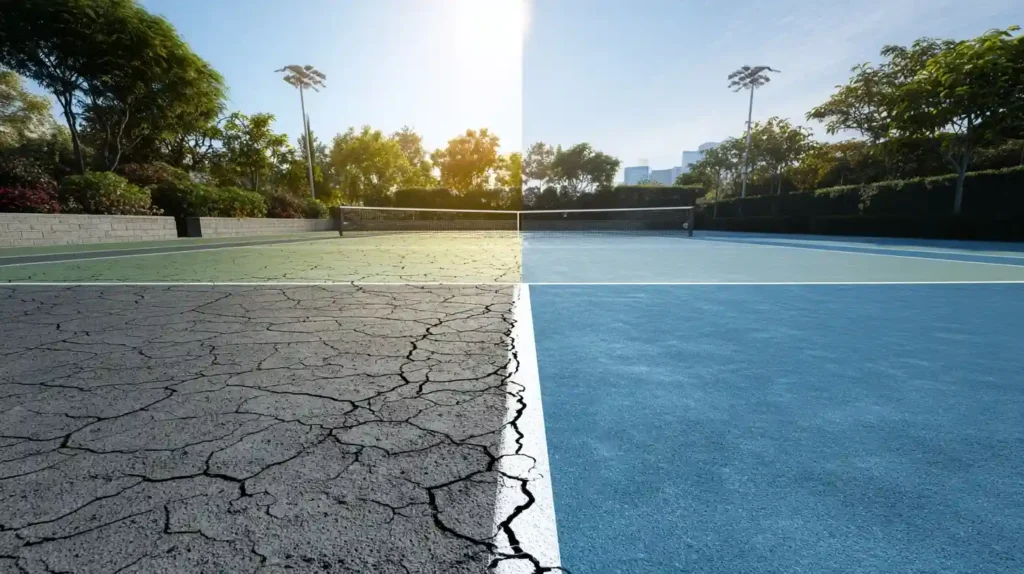
Table of Contents
Benefits of Polypave Court Shield
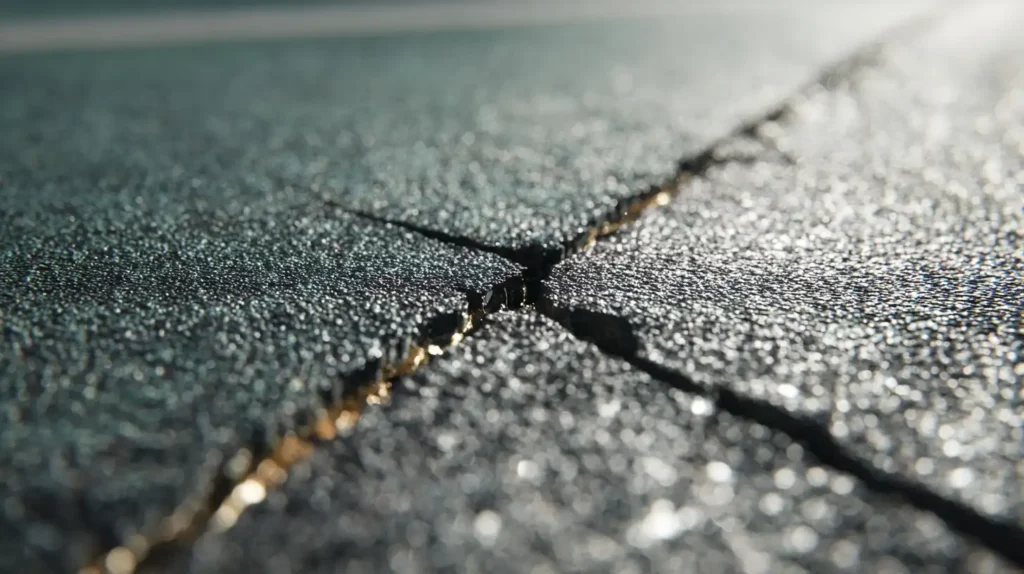
For builders and contractors, adding this patented crack-prevention layer pays off on day one and over the long term.
Benefits of using this new, exciting product include:
- Helps prevent reflective cracking so surfaces stay smooth and consistent longer.
- Improves play quality with predictable ball response and traction across tennis, pickleball, and basketball.
- Enhances safety by reducing trip points from crack edges and surface irregularities.
- Extends service life and delays costly resurfacing, lowering total lifecycle cost.
- Minimizes downtime so courts stay open and reservation schedules stay on track.
- Preserves a clean, professional look that reflects well on clubs, schools, and parks.
- Works over asphalt and concrete in a wide range of climates, from freeze–thaw to high heat.
- Drops into standard acrylic systems with familiar tools and steps—no special equipment required.
- Reduces waste by avoiding premature tear-outs and frequent repair cycles.
- Backed by U.S. Patent No. 12,358,261 for a verifiable, modern crack-prevention approach.
Why Contractors Choose Polypave Court Shield
Polypave Court Shield helps tennis court builders, pickleball court builders, and multisurface court builders deliver predictable outcomes on compressed schedules—while protecting margins and reputation in crack prevention on the courts they service.
Who Benefits from Polypave Court Shield?
Every tennis court project team faces the same physics: thermal movement, moisture, and base conditions. Polypave Court Shield helps builders in multiple scopes control these variables and deliver more resilient courts.
Professional Court Builders
Baseline and service boxes concentrate play loads. Existing shrinkage cracking or longitudinal seams in asphalt tend to reflect quickly in these zones. Polypave Court Shield helps tennis court construction teams manage those lines so resurfacing holds its appearance and texture longer. Pickleball layouts cluster players around the non-volley zone, amplifying wear near the kitchen line. For a pickleball court contractor working on concrete pads with joints, the system’s transition details help limit telegraphing and keep color boundaries crisp.
Many community facilities often combine tennis, pickleball, and basketball markings on the same pad. A multisurface court contractor benefits from Polypave’s unified crack-isolation approach that supports varied play patterns, changing usage, and seasonal swings without rapid surface deterioration.
Facility Owners
Polypave Court Shield helps keep courts in service longer, reducing downtime and the frequency of resurfacing cycles. Fewer crack-related callbacks mean lower lifecycle costs and cleaner maintenance budgets for facility owners. A consistent, attractive surface also boosts user satisfaction—great for memberships, reservations, and community programs.
Players
With fewer reflective cracks telegraphing to the surface, athletes get more uniform traction and predictable ball response following the application of the Polypave product. That consistency supports safer footwork at baselines, kitchen lines, and transition zones. The result is a better playing experience and more available court time throughout the season.
Court Installation Process for Crack Prevention
Polypave Court Shield drops into the workflow you already run—sitting between the base and your acrylic finishes to help keep small slab movements from printing through as visible cracks.
The process is straightforward and installer-friendly: prep the surface, apply the isolation layer with familiar tools, confirm cure and adhesion, then proceed with cushion/resurfacer, color, and lines. The result is cleaner finishes, fewer callbacks, and longer service intervals for every tennis court builder, pickleball court builder, and multisurface court contractor.
How to Apply Polypave Court Shield
Application is straightforward: create a clean, continuous isolation layer over your repaired areas, let it cure, then finish the court the way you normally would. Here’s the builder-friendly flow.
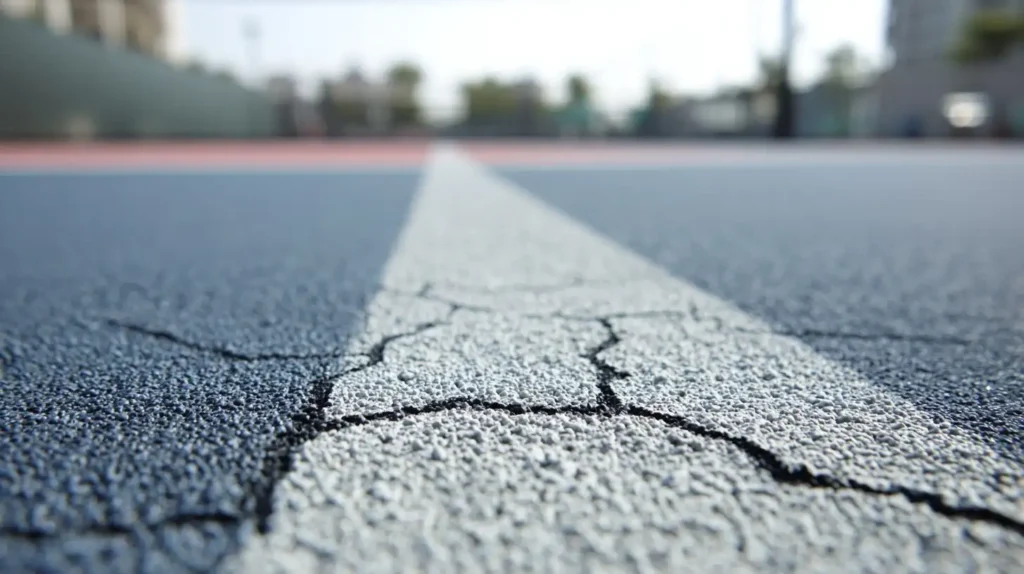
Lay Down a Smooth, Continuous Isolation Layer
Work in manageable lanes and follow the specified coverage so the layer is uniform with no skips or “holidays.” Keep a wet edge as you move, and stay within pot life and ambient limits so the film forms evenly.
Set Your Crew Rhythm and Sequence the Slab
Assign clear roles—cut-in, field, and QC—so production stays steady and clean. Respect temperature, humidity, and dew point windows. If shade moves across the slab, sequence work to avoid cure lines or gloss differences.
After Cure, Integrate Cushion, Surfacer, Color, and Lines
Once the isolation layer is fully cured, proceed with cushions and resurfacers per spec. Confirm the surface profile and adhesion before moving to color coats and striping.
Do Simple Adhesion and Cure Checks
Use quick tape-pull tests or equivalent field checks to verify bond and readiness. If the layer still feels “green,” wait—rushing this step risks future failures. Log batch/lot numbers and weather conditions for your closeout package.
Common Builder Questions for Polypave Court Shield
How is Polypave Court Shield different from standard crack fillers?
Crack fillers address the void; Polypave Court Shield addresses movement. It adds a managed isolation layer that reduces stress concentration and helps prevent reflective lines from returning to the finished surface.
Can Polypave be used on new builds, or only renovations?
Both. On new concrete, it focuses on joint transitions and early shrinkage concerns. On existing asphalt or concrete, it overlays known crack patterns to stabilize the finished appearance.
Does this crack prevention product work under cushioned acrylic systems?
Yes. It sits beneath cushion/resurfacer layers and above properly repaired cracks, helping preserve the cushion’s integrity and the final color coats.
What prep is required for concrete with joints or prior repairs?
Clean, sound substrate is essential. Honor joints per design, remove weak repairs, and rebuild transitions. Then apply Polypave Court Shield following coverage guidance before returning to cushion and color.
How does Polypave perform in freeze–thaw regions and high-heat zones?
Plan environmental windows and sequencing accordingly. The system helps attenuate movement, but cure timing and moisture control remain critical for long-term success in extreme climates.
What lead times, training, or field support are available for Polypave Court Shield?
Coordinate early for project reviews, submittals, and sample kits. Pre-job briefings help your crew hit the ground running and keep schedules intact.
How do I price/estimate a project that includes Polypave Court Shield?
Map crack density during your site walk, set allowances for additional coverage, and tie unit prices to linear footage or square footage. Include environmental contingencies in your schedule.
Become a Certified Polypave Court Shield Provider Today
If you’re a tennis court builder, pickleball court contractor, or multisurface court contractor, we’ll help you win on performance and schedule by equipping you with everything you need to become a certified installer of Polypave Court Shield. Request the spec packet for the U.S. Patent No.12,358,261, then gain access to our marketing materials, training resources, and support representatives.
Reach us to learn more by calling (252) 955-7439 or filling out our contact form below to get started.